
How to Check Criminal History in San Francisco County
There is no single complete San Francisco County criminal history database. Begin with the Superior Court case information page when the goal is to find a filed criminal case. Its criminal query accepts a case number, defendant name, or attorney name. A weekly cumulative criminal index offers another route. For a recent booking or present custody question, use the Sheriff jail search instead. Police incident reports and local RAP sheets remain with SFPD, while the California Department of Justice supplies a person with a fingerprint-based copy of their own statewide summary record.
Accuracy improves when the search starts with the exact spelling, prior names, date of birth, arrest date, or case number. A name match alone does not prove identity. Each source answers a different question, so compare the event date, charge, case number, and final disposition before treating separate entries as one history.
- Search the Superior Court by case number or defendant name for charges that were filed.
- Check the cumulative index if the standard court query does not locate the matter.
- Use the Sheriff lookup for current jail status, entering the first three letters of both names.
- Ask SFPD for a local RAP sheet when the court requires a case number that is not known.
- Order court copies or submit a personal DOJ record review when official proof or a statewide self-audit is needed.
The court's case-information entry page is shown in the image below. Its separate links help a reader choose between current case information and the weekly index.
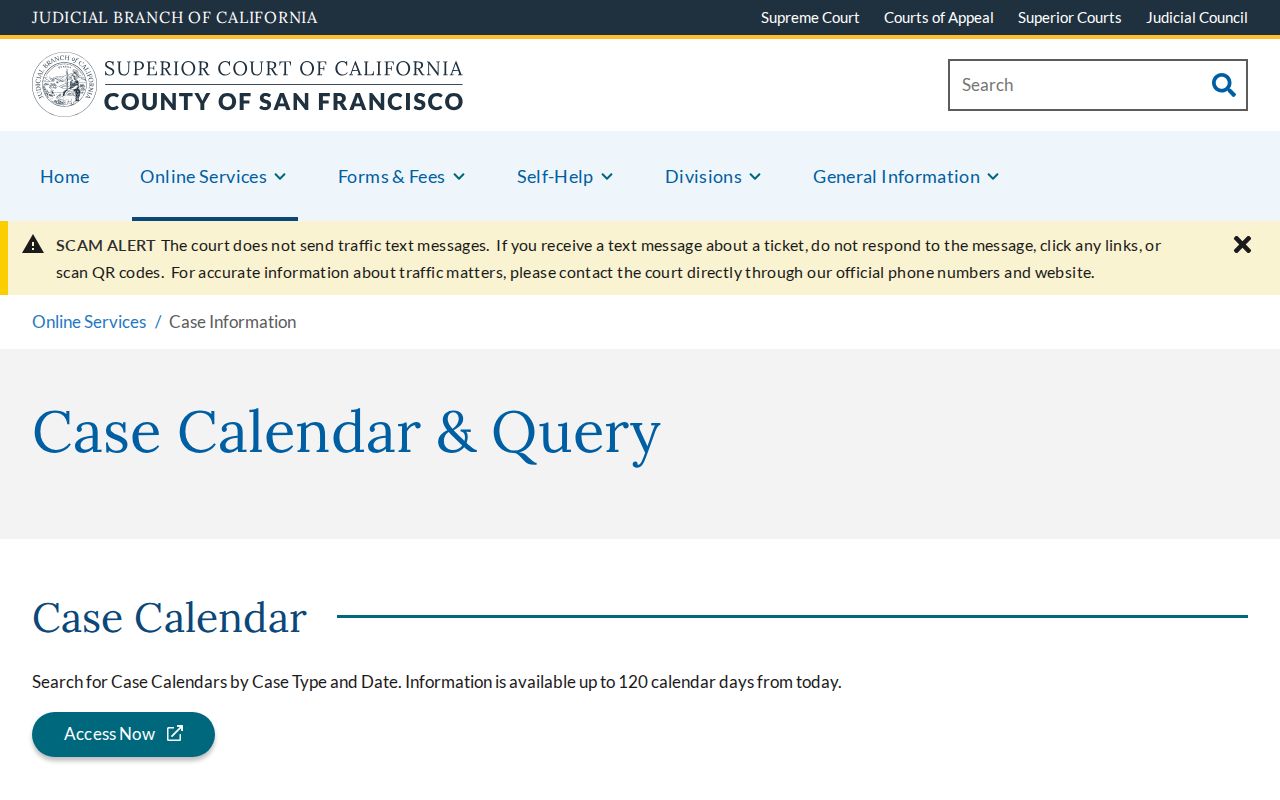
The screen reinforces a central rule: an online index is the starting point, while copies and certified records still come from the clerk.
San Francisco Criminal Records Corridor
San Francisco is both a city and a county. That puts most local criminal record offices in one consolidated system, yet not in one portal. The Hall of Justice at 850 Bryant Street remains the key court-record address. The Superior Court Criminal Clerk and records counter are in Room 101. The SFPD Identification Bureau is in Room 475, where local RAP sheets and clearance letters are handled. Nearby offices include Adult Probation at 945 Bryant Street and the Public Defender at 555 7th Street.
SFPD report copies take a different path. Crime Information Services Unit staff work at Police Headquarters, 1245 3rd Street, first floor. SFPD states that district stations do not provide copies. That detail prevents a common wasted trip. Court records belong with the clerk, police reports with CISU, local summary history with the Identification Bureau, and jail records with the Sheriff.
Criminal Records Counter
850 Bryant Street, Room 101
San Francisco, CA 94103
415-551-0651
Weekdays, 8:30 a.m.-4:00 p.m.; closed noon-1:00 p.m.
SFPD Records Management
1245 3rd Street, 1st Floor
San Francisco, CA 94158
415-575-7232
Weekdays, 8:00 a.m.-5:00 p.m., excluding holidays
SFPD Identification Bureau
850 Bryant Street, Room 475
San Francisco, CA 94103
415-553-1415
Local RAP sheets and clearance letters
Note: The court warns that duplicate requests for the same case number can delay processing.
Official California Background Checks
The California Department of Justice does not provide a casual public name search for another person's criminal history. Its public-facing process is a personal record review. California residents complete Live Scan form BCIA 8016RR, mark the application and reason as “Record Review,” and submit fingerprints at a public Live Scan site. The result lets the requester inspect their own state summary history for accuracy and completeness. Authorized applicant agencies have separate statutory channels.
The DOJ processing fee is $25, and the provider adds a rolling fee that varies by site. A fee waiver may be available based on public assistance, low income, or no income. If the response is wrong or incomplete, DOJ includes challenge form BCIA 8706 with a record that contains criminal information. Supporting court dispositions can help prove the correction.
| Official product | Cost | Best use |
|---|---|---|
| DOJ personal record review | $25 | Audit your own California fingerprint history |
| Live Scan rolling service | Varies | Fingerprint capture and transmission |
| Superior Court certification | $40 per court number | Official San Francisco court copy |
| SFPD incident report | Free | Copy of an eligible police incident report |
California DOJ's record-review instructions appear below. They distinguish personal review from the restricted criminal-history access used by law enforcement and authorized agencies.
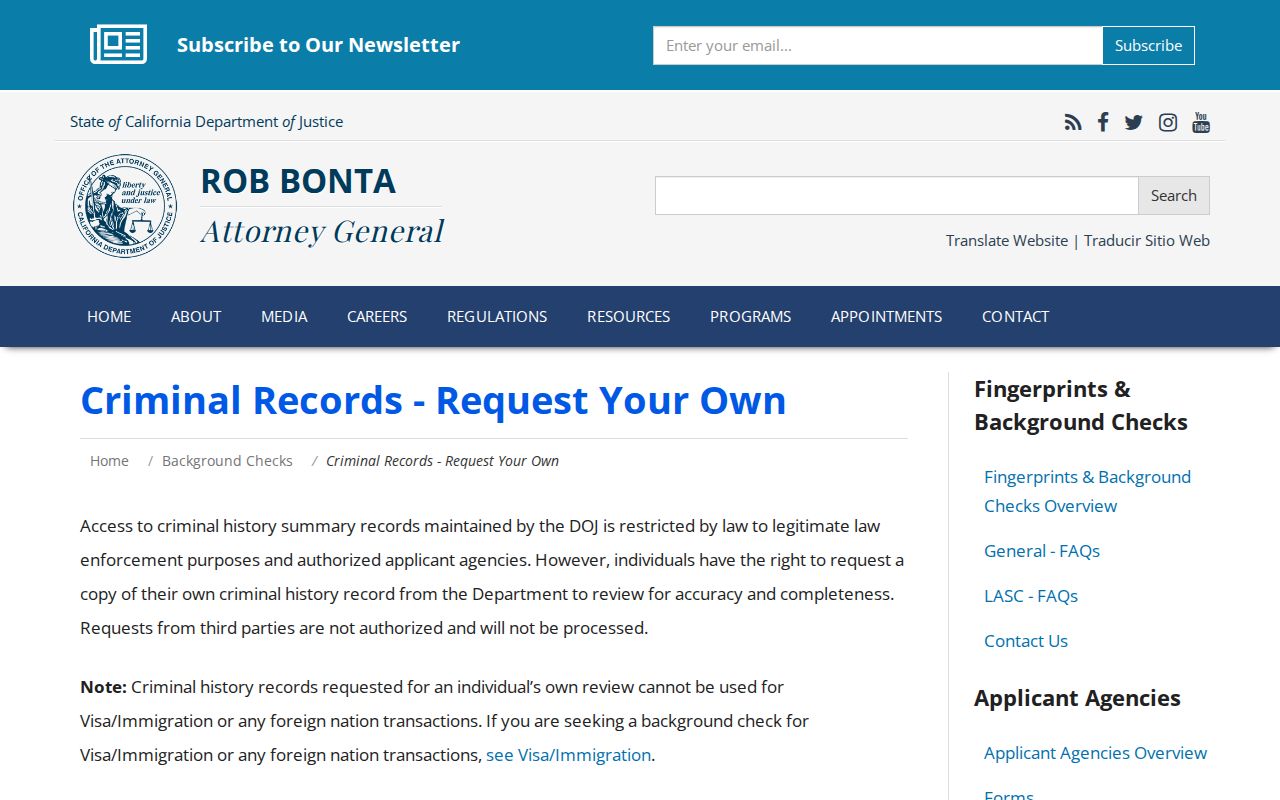
This is the official route for a statewide self-audit, not a public third-party background search.
San Francisco Live Scan Choices
The DOJ Live Scan location search filters approved providers by county. Results show each provider's address, hours, rolling fee, and accepted payment methods. Some sites take walk-ins, while others require appointments. Government fees may be listed separately from the provider's rolling charge, so confirm the total before arriving.
Bring the completed BCIA 8016RR form and accepted identification. Out-of-state residents follow a different route using an FD-258 fingerprint card and BCIA 8705 mailed to the Record Review and Challenge Section. Mixing the resident and out-of-state processes can delay a request.
The official provider finder is pictured here with the county-filtered location information.
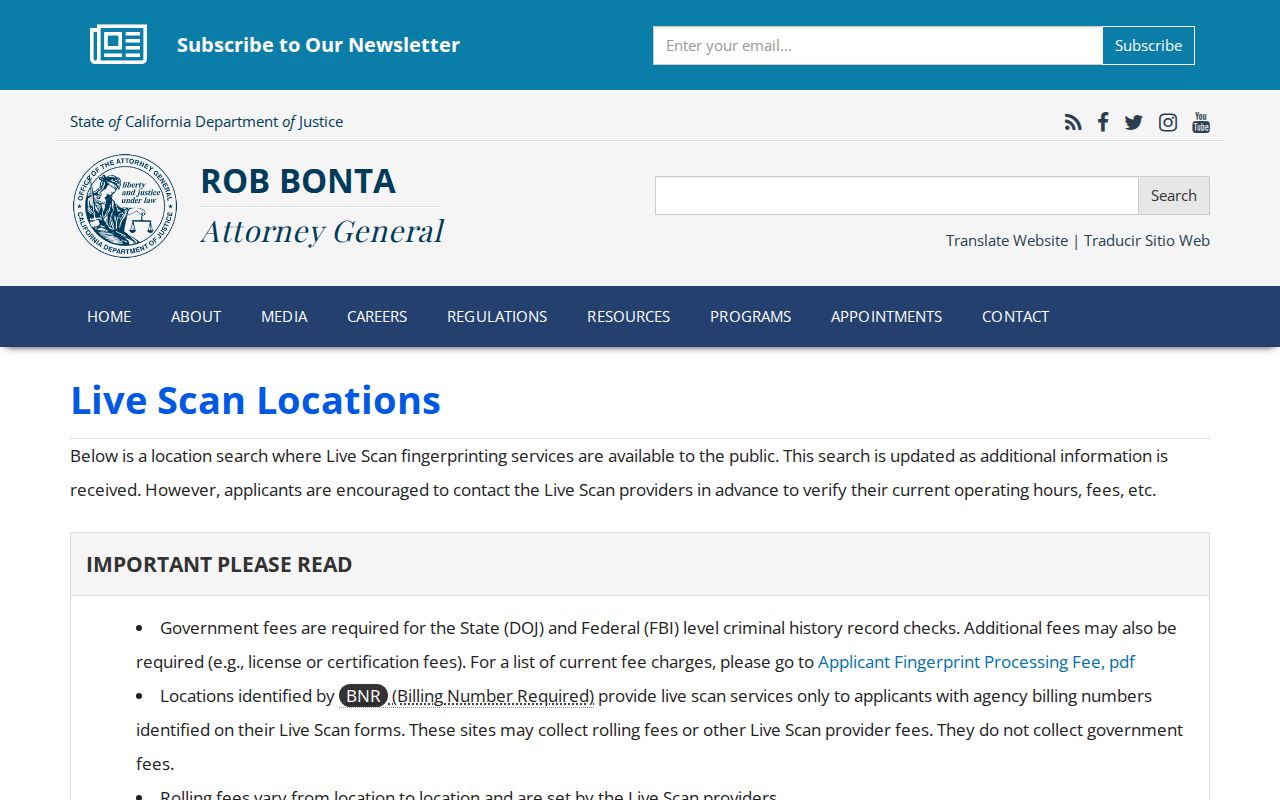
The result details make it possible to compare access, payment, and rolling fees before choosing a fingerprint site.
Types of Criminal Records
A San Francisco criminal record is assembled as an event moves through agencies. SFPD or another arresting agency creates an incident or arrest report. The Sheriff adds booking and custody data if jail follows. The District Attorney decides whether to file charges. Once filed, the Superior Court creates the case docket, minutes, rulings, disposition, and sentence. Fingerprints and reported outcomes may also become part of the California DOJ summary history.
- Police reports describe the reported event and investigation, subject to redaction and access limits.
- Booking records show jail intake, custody identifiers, housing, bail, and release information.
- Court files show filed charges, hearings, pleas, rulings, disposition, and sentence.
- Summary history links arrests and dispositions to fingerprint identity in state or local systems.
- Supervision and registry records cover probation, parole, prison custody, or legally public registration data.
An arrest entry is not a conviction. Charges at booking may differ from the complaint, and a case may end in dismissal, diversion, acquittal, plea, or conviction. The court disposition is the best source for the result.
When San Francisco Jail Search Fits
The San Francisco Sheriff's Office manages county jail and custody records. Its “Find a person in jail” tool asks for the first three letters of the person's first and last name. The result is aimed at present custody, booking, housing, release, and related jail facts. It is not a full conviction search and may not show someone who has already been released.
When a person is absent from the roster, check the Superior Court portal for filed charges and SFPD channels for the incident report. If the person was sentenced to state prison, use CDCR instead. Sheriff records that are not displayed online can be requested through the Sheriff's GovQA public-records route.
The Sheriff's official homepage places jail lookup and public-record request links among its main services.
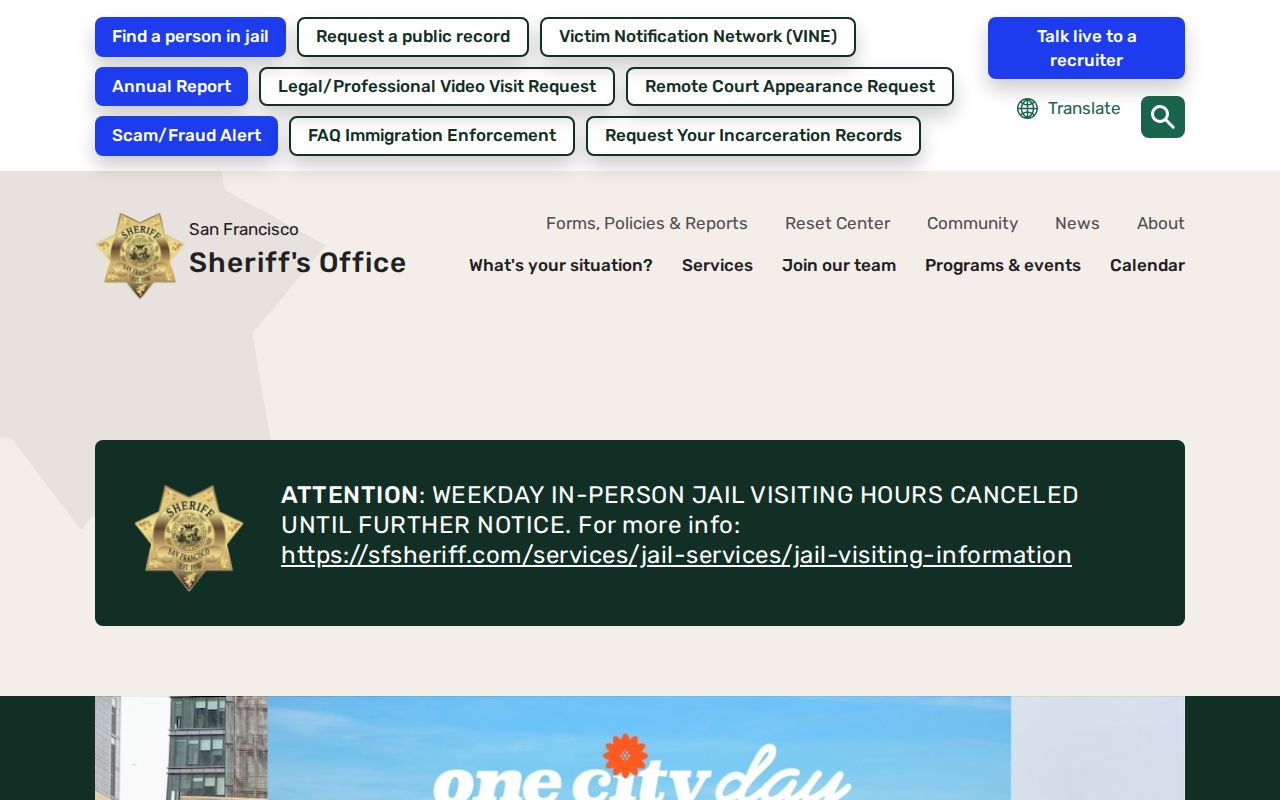
Those two links answer different needs: the roster addresses current custody, while GovQA handles releasable records not shown in the lookup.
What a San Francisco County Criminal Record Shows
The fields depend on the source. A police report may identify the incident, location, parties, and alleged offense. A booking file adds jail identifiers and custody dates. The court file adds the formal charge, courtroom events, and final result. California summary history may tie arrest and disposition entries to fingerprints, but reporting gaps can leave a disposition incomplete until corrected.
| Name & identifiers | Legal name, aliases, date of birth, physical descriptors, and agency identifiers when releasable. |
|---|---|
| Arrest & booking | Incident date, arresting agency, booking number, arrest charges, custody site, bail, and release data. |
| Charges & statutes | The alleged offense at arrest and the charge later filed by the prosecutor, which may differ. |
| Disposition | Dismissal, diversion, acquittal, plea, conviction, or another court resolution. |
| Sentence | Custody, probation, fines, terms, or other orders entered by the court. |
| Supervision | County probation, CDCR parole or prison status, and public registry data where law permits. |
- Disposition
- The court's recorded outcome for a charge or case.
- RAP sheet
- A summary criminal-history record, not the same as the full court file.
- Complaint
- The charging paper that starts a prosecuted criminal case.
- Court minutes
- The clerk's record of what occurred during a hearing.
San Francisco Record Copy Fees
The Superior Court criminal-record request form separates plain copies, certification, audio, retrieval, and staff search charges. A plain copy costs $0.50 per page. Certification costs $40 per court number. Audio costs $25 per case, standard warehouse retrieval costs $6, and a records search lasting more than ten minutes costs $15. SFPD incident report copies are free, though the requester must supply valid identification when required.
This fee split reflects the product. A free portal result is an index, not a certified file. An SFPD report records the police event. A certified court disposition proves what the court entered. Request only the document needed, and avoid sending a duplicate request while the first is pending.
Public Access Laws
The California Public Records Act governs access to many local agency records, but it does not make every criminal-history detail public. Active investigations, victim information, juvenile files, medical data, security material, and sealed records can be withheld or redacted. Court access follows judicial rules and specific sealing orders. State and local summary histories face tighter dissemination limits than an ordinary public agency record.
Key California laws:
Government Code Division 10 establishes the California Public Records Act framework for local agency requests.
Penal Code section 11105 limits dissemination of state summary criminal history.
Penal Code section 13300 governs local summary criminal-history information.
Penal Code section 1203.4 provides qualifying conviction dismissal relief.
Penal Code section 851.93 addresses automatic arrest-record relief.
Ask the office that holds the source record when an online result lacks context. A court docket may omit the police narrative, and a police report may not show the final court outcome.
County, State, and Federal Custody
Custody searches follow the agency that holds the person. San Francisco Sheriff's records cover the county jail. The California Incarcerated Records & Information Search, or CIRIS, covers people in CDCR custody. Federal incarceration is separate and uses the Bureau of Prisons locator, whose records generally run from 1982 forward. Release dates can change after sentence recalculation.
CDCR's CIRIS gateway appears below as the state-prison layer of a San Francisco County criminal history search.
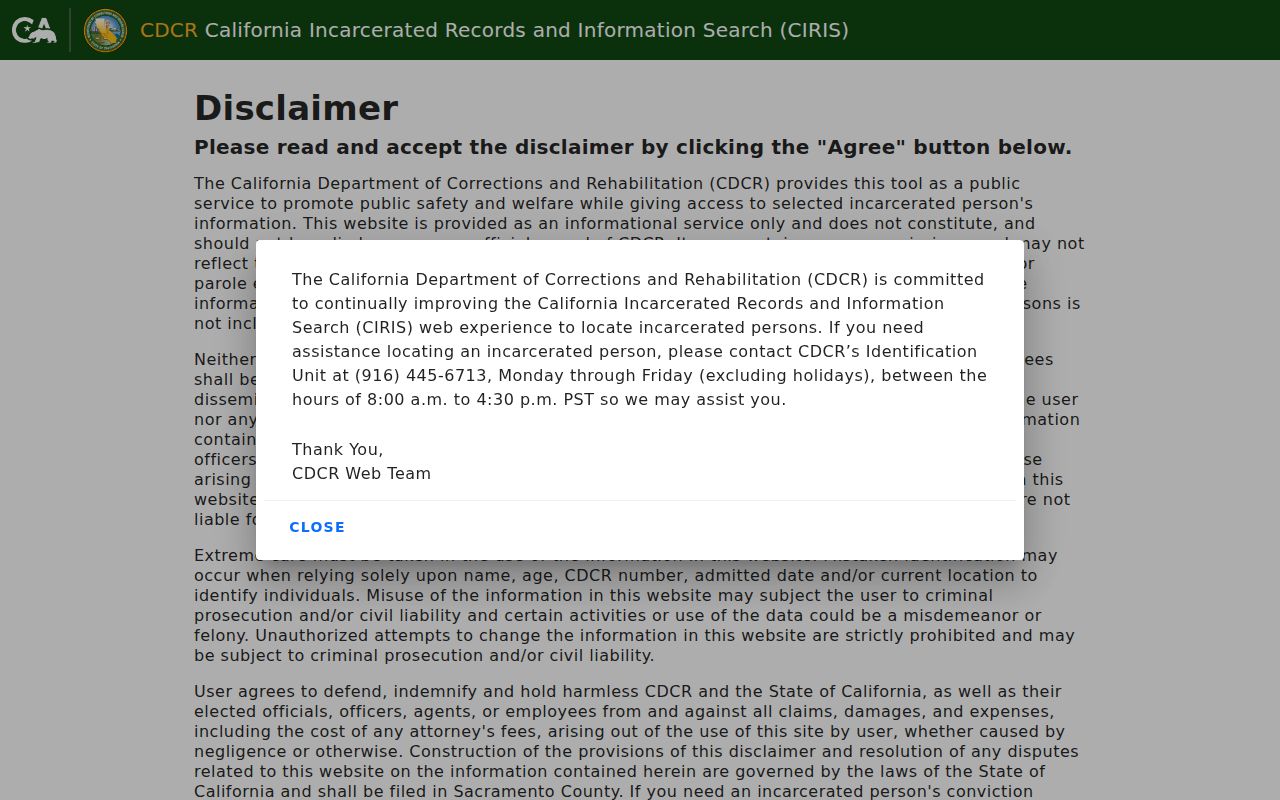
A county booking does not automatically mean state imprisonment. Switch to CIRIS only when the sentence or transfer points to CDCR custody.
The Federal Bureau of Prisons inmate locator is the corresponding federal search channel.
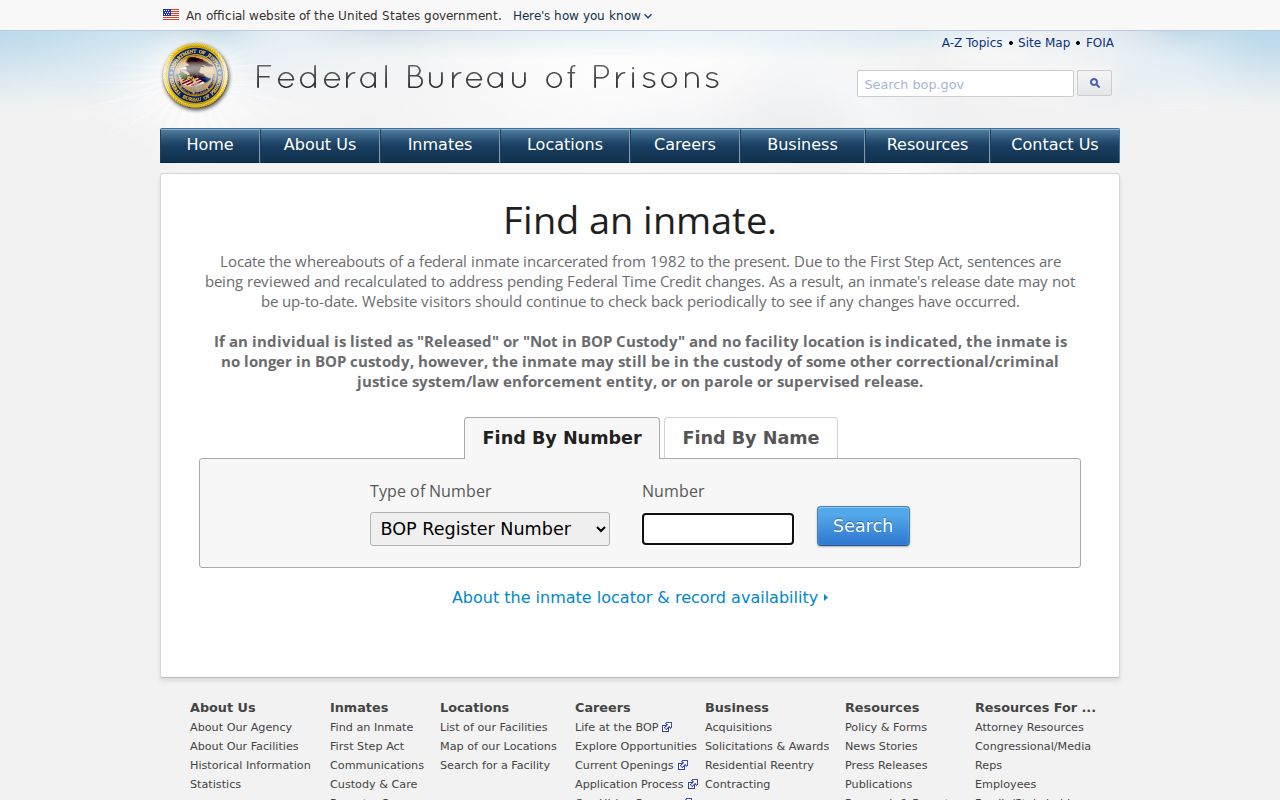
Federal arrests and cases may also require the Northern District of California docket rather than a local court or jail search.
Sealed, Expunged & Restricted
California “expungement” commonly refers to dismissal relief under Penal Code section 1203.4. It does not erase the record as though the case never existed. Other forms of relief include arrest sealing, automatic arrest-record relief under section 851.93, automatic conviction relief under section 1203.425, and court sealing orders. Juvenile matters and protected personal information have separate access limits.
San Francisco's Public Defender operates a Clean Slate Program for post-conviction and record relief. The program's voicemail is 415-553-9337. A person reviewing their own record should compare the court disposition with the DOJ response. If the state summary lacks a dismissal or other result, obtain proof from Room 101 and use the DOJ challenge process. Changes may take time to reach downstream databases.
Note: A blank public search result does not prove that no restricted or nonpublic record exists.
San Francisco Warrant Record Routes
No official public San Francisco Sheriff active-warrant search was located in the project research. For a local bench warrant, start with the Superior Court criminal query and Criminal Clerk because failure-to-appear and compliance warrants are court issued. Court minutes or calendar entries may show a warrant event. The Sheriff jail lookup confirms custody after an arrest but does not serve as a pre-arrest warrant database.
The court's criminal-record request form includes a search-warrant-number field for records that are legally available. Active, sealed, or law-enforcement-sensitive warrant material can be withheld. Anyone trying to resolve their own possible warrant should contact the Criminal Clerk at 415-551-0651, use the case number when known, and obtain a minute order or disposition after the matter is resolved. Unofficial warrant sites are not a safe substitute.
Federal Cases in San Francisco
Federal criminal cases are not filed in San Francisco Superior Court. The U.S. District Court for the Northern District of California handles the federal layer, and PACER provides docket and document access. The San Francisco federal courthouse is at 450 Golden Gate Avenue. A local Sheriff result may appear if a federal detainee is housed locally, but the underlying charge and disposition remain in the federal docket.
The Northern District's official court site is shown below.
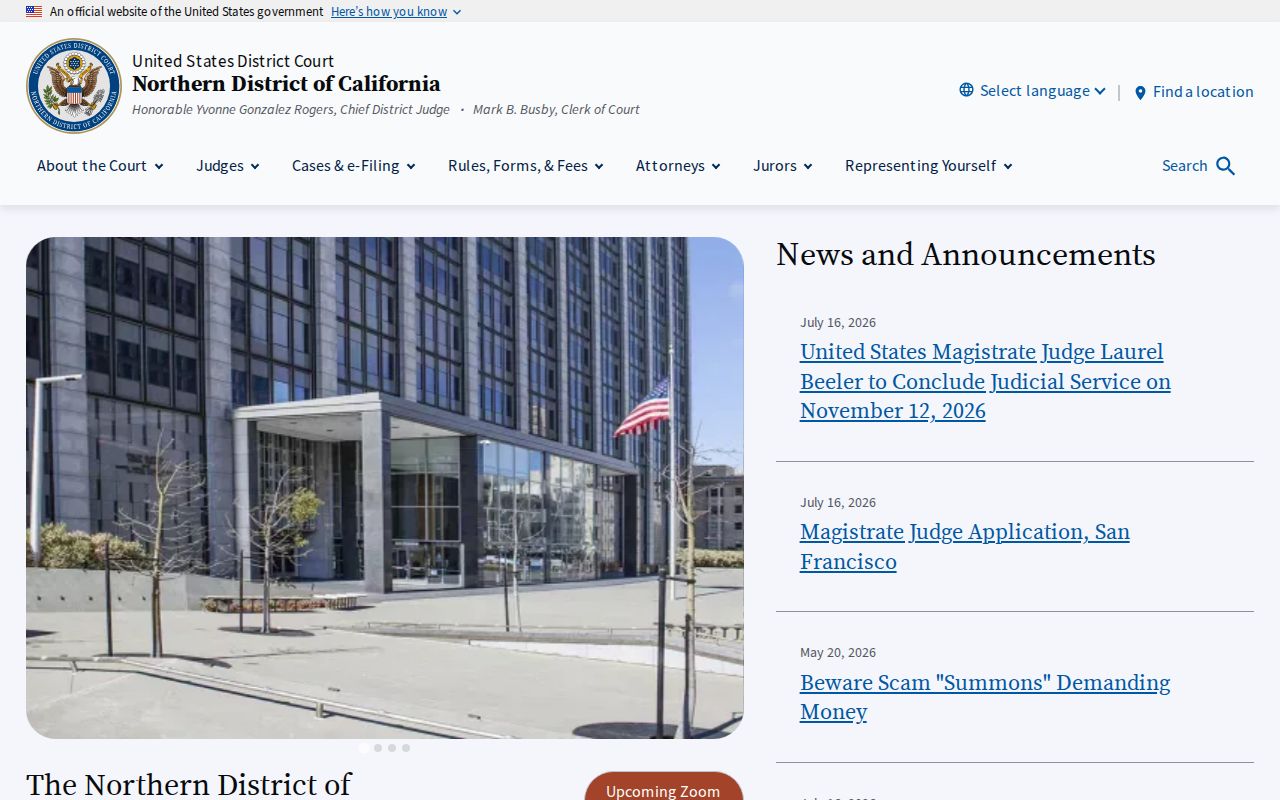
This separate system explains why a federal matter may not appear in the county criminal case portal.
Criminal Records by City in San Francisco County
San Francisco County has one incorporated city because the City and County of San Francisco is consolidated. There is no separate municipal criminal court or second city police records system. SFPD creates city police records, the Sheriff handles county jail bookings, and the Superior Court hears local criminal, traffic, municipal-code, and county-ordinance cases. The city card therefore points to the one local profile supported by the research.
San Francisco Criminal History
SFPD report channels, Sheriff booking records, and Superior Court case access in the consolidated city-county.